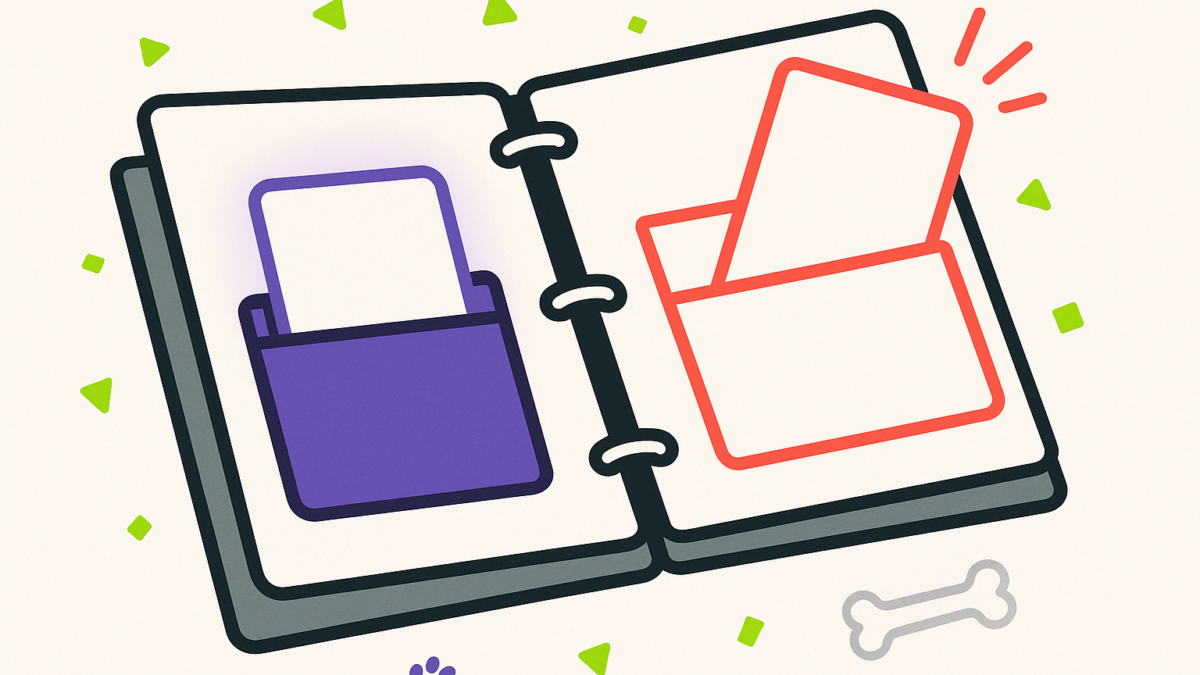
If you've spent any time in Pokémon TCG collecting groups online, you've probably seen the debate: side-loading binder pages are the "safe" choice, top-loading pages are the "risky" one, and picking the wrong one means your cards are doomed. Take a breath. It's not that dramatic. Both styles exist for good reasons, plenty of experienced collectors in our pack happily use both, and the "right" answer really does depend on what you're putting in the binder and why. Here's a friendly walk-through of what actually differs, what the genuine trade-offs are, and how to pick with confidence.
First, a quick vocabulary check
Before we go anywhere, let's define the terms, because a couple of them get mixed up constantly (and that's not your fault, the naming is genuinely confusing).
- Side-loading pocket: the pocket opening runs along the long edge of the page. You slide the card in sideways.
- Top-loading pocket: the pocket opening runs along the short top edge. The card drops straight down into it.
- Toploader: a separate rigid plastic card holder, sold on its own. Nothing to do with pocket direction, despite the similar name (more on this below, because it trips a lot of people up).
- O-ring, D-ring, and ringless (zip) binders: describe how the pages are bound, not how the pockets open. A different variable entirely.
Got it? Good. On we go.
What actually differs between side-loading and top-loading pockets
Mechanically, the only real difference is the direction of the opening, but that one detail changes a few things in practice.
With a top-loading pocket, the opening sits at the top of the pocket, in the same direction gravity is pulling the card. If a binder is jostled, dropped, or held upside-down, there's a straightforward path for a card to slide out.
With a side-loading pocket, the opening sits at the side. Gravity is now working across the opening rather than out of it, so a card is less likely to just fall out if the binder tips.
That said, pocket direction is only one factor in how secure a card actually is inside a binder. Sleeve fit (a snug penny sleeve behaves very differently to a loose one), the overall build quality of the page, how tightly the binder closes, and simply how the binder gets handled all matter too. Pocket direction sets the baseline. Everything else stacks on top.
The genuine trade-offs
Here's how the two styles actually compare on the things that matter day to day. No winner declared, just the honest picture.
| Consideration | Side-loading | Top-loading |
|---|---|---|
| Card security if the binder is jostled or tipped | Better, all else being equal. Cards are less likely to slip out. | Weaker. Gravity works with the opening, not against it. |
| Speed of loading and swapping cards | Slower. You're feeding cards in from the side. | Faster. Drop and go. |
| Cost | Usually pricier. Common in mid-range and premium binders. | Usually cheaper. Standard in entry-level and budget binders. |
| Dust and dirt ingress | Slightly better, since the opening isn't facing up. | Slightly more exposed, especially if the binder sits flat. |
| Best fit | Long-term storage, cards you don't move around often, higher-value singles. | Active trading, frequent reorganising, kids who love to rearrange their collection. |
A fair way to think about it: side-loading prioritises security, top-loading prioritises speed and cost. Neither of those is the wrong priority. They're just different priorities.
One honest caveat on side-loading, because commercial sources tend to skip it: side-loading isn't foolproof either. If a binder gets carted around a lot (to school, to league, in a bag), cards can still gradually work their way up and out of a side pocket over time. It's more secure, not invincible.
Clearing up the "toploader" confusion
This one deserves its own moment, because it catches out a lot of people (parents buying their first binder, especially).
You'll see binders sold as "toploader binders" or "toploader-compatible binders." Instinct says these must be top-loading, right? Actually, no. In most cases, these binders use side-loading pockets that are sized larger than a normal card pocket so that a rigid toploader (the separate hard plastic card holder) can slide into them.
So a "toploader binder" typically means: side-loading pockets, big enough to hold a card that's already inside a toploader.
A word of caution though: "toploader binder" isn't a standardised term. Different manufacturers use it to mean slightly different things, and pocket dimensions vary from one brand to the next. Before you buy, check the product listing for the actual pocket dimensions and confirm the binder is described as compatible with the specific toploaders you're planning to use (standard 35pt toploaders are the most common size, but there are thicker options for graded-style storage). Two minutes of checking saves an annoying return.
If your head is spinning, you're not alone. The short version:
- "Toploader" = the rigid plastic sleeve you can buy on its own.
- "Top-loading pocket" = a pocket in a binder page that opens at the top.
- "Toploader binder" = usually a binder with side-loading pockets big enough for toploaders to slide into, but always check the listed dimensions before you buy.
Three related terms, three different things. Now you know.
Ring type is a separate issue (and it's often the real culprit behind "binder dings")
If you've ever heard collectors warn about "binder dings", small dents or creases near a card's edge, that damage is often traced back to the rings in a traditional O-ring binder pressing cards against the metal as the binder is opened, closed, and shelved. It's not caused by pocket direction.
It's worth being honest that rings aren't the only possible cause. Overstuffed binders, poor-quality pages that let cards shift around, tight sleeves that pinch during page turns, and rough handling can all leave marks that look similar. Rings are the usual suspect, but they aren't the only one.
That's why a lot of collectors gravitate toward D-ring binders (rings that sit flatter and further from the pages) or ringless / zip binders (no rings at all, pages are stitched in). Any of those can come with either side-loading or top-loading pockets, they're independent choices.
So if avoiding binder dings is your main worry, look at the ring style first, then think about build quality and how you fill and store the binder.
What experienced collectors actually do
Here's the bit that most "which is best" articles quietly skip: long-time collectors rarely pick one style and stick to it religiously. The pattern we see over and over is a hybrid setup:
- Chase cards, high-value singles, and grading candidates live in individual toploaders, sleeves, or graded slabs. They don't go in binders at all, or they go into a side-loading binder specifically designed for extra protection.
- Bulk, trade stock, and cards for browsing or showing off live in binders, and honestly, the loading style matters less here. A cheerful top-loading binder full of trade fodder is completely fine.
- Set-completion binders and personal favourites tend to end up in side-loading pages, because they're being kept for the long haul.
The lesson: it's not really "which loading style is correct?" It's "what is this particular binder for?" Once you know the job, the answer usually becomes obvious.
For what it's worth, I'm working through an all-English Ninetales collection, and those cards live in a side-loading binder because they're going nowhere. My bulk trade box? Top-loading pages all day. Same collector, both styles, no crisis.
How to choose with confidence
Rather than a verdict, here are the questions that will actually get you to the right answer for your binder.
- What's going in it? Trade cards and bulk: top-loading is fine. Long-term keeps and higher-value singles: side-loading is worth the extra spend.
- How often will it move around? Binder stays on a shelf: either style works. Binder travels to league, school, or a friend's house every week: side-loading, or side-loading pages sized for toploaders, is safer.
- Who's using it? A kid who wants to rearrange their collection every three days will find top-loading much less frustrating. And that matters, because a hobby that feels fun is a hobby that sticks.
- What's the budget? Top-loading binders are genuinely cheaper, and for a starter binder there's nothing wrong with that. You can always upgrade later.
- Are you worried about binder dings? That's mostly a ring-style question, not a pocket-direction one. Look for D-ring or ringless binders.
And here's the reassuring bit: if you buy one style now and want to switch later, moving cards between binders is quick and easy. Nobody has ever regretted starting with the affordable option and upgrading once they knew what they actually wanted.
The bottom line
Side-loading vs top-loading isn't a right-vs-wrong argument, it's a priorities argument. Side-loading gives you better security for the long haul. Top-loading gives you speed, convenience, and a friendlier price. Most experienced collectors use both, matched to the job each binder is doing. Whichever one you already own, or are about to buy, is very likely a sensible choice for what you're using it for.
If you're just getting started (or helping a young collector get started), our guides on how to get your kids into the Pokémon TCG and how much you should actually spend are worth a look too, they'll help you spend your first collecting pounds where they actually count.
Happy collecting, pack.
