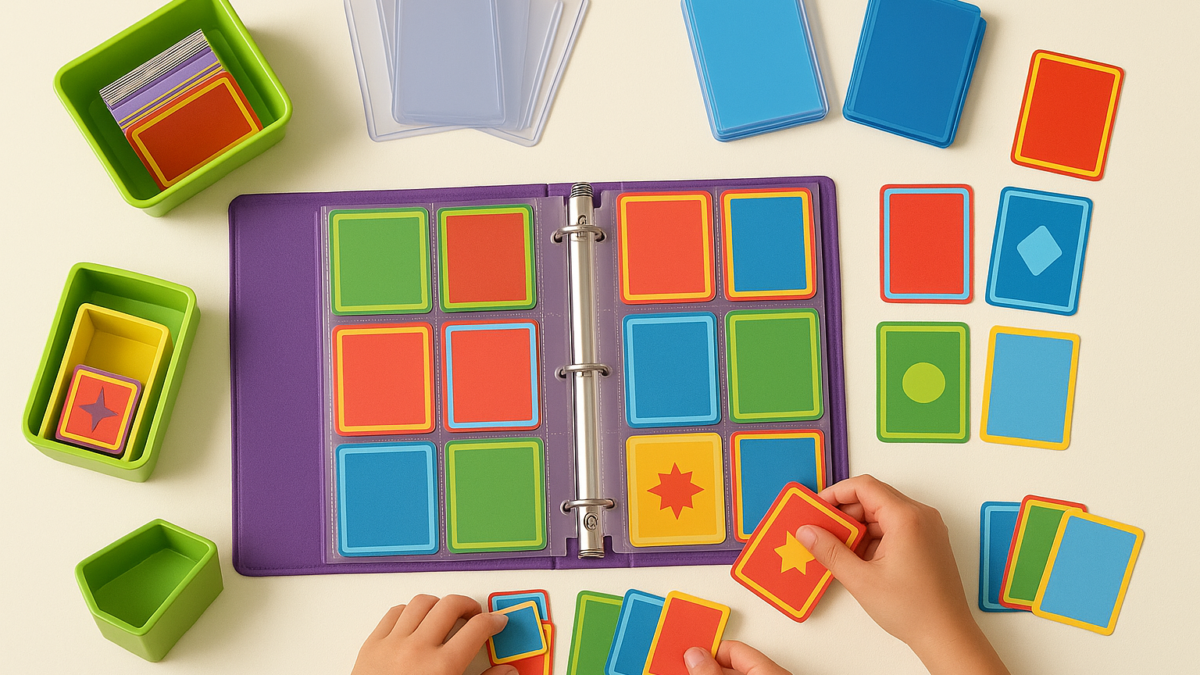
If your child’s Pokémon cards are currently living in bedroom corners, backpack pockets, and the space between car seats, you’re not alone. Most young collectors start with a bit of chaos. The good news is that organising a child’s collection does not need to be expensive, complicated, or a constant battle. With the right simple system, it can become a habit that sticks.
How to organise kids Pokémon card collection
When parents ask us how to organise kids Pokémon card collection, we usually suggest starting with one question, what do you want the system to do?
For some families, the aim is simply to stop rare cards from getting bent or lost. For others, it is about helping a child feel proud of their collection and able to find favourite cards easily. Once you know the goal, it is much easier to pick the right setup without overbuying accessories your child will never use.
A good system should be:
easy enough for a child to maintain,
protective enough for the cards that matter,
simple to reset after a busy day, and
affordable for the family.
That last point matters. The hobby should feel welcoming, not like it comes with a big upfront price tag just to keep cards in one place.
Keep the everyday cards in a binder
For most young collectors, a binder is the best place to begin. It gives cards a home, makes them easy to flip through, and helps children see their collection growing. That visual aspect is important, because kids are much more likely to care for cards they can actually enjoy looking at.
A simple side-loading binder is often the easiest option for children. Side-loading pockets help reduce cards sliding out, and a smaller binder is usually easier for little hands to manage than a huge one.
If you are building a system from scratch, we recommend:
a sturdy binder,
penny sleeves for any cards that matter a bit more, and
a clear rule for what goes in the binder.
That rule might be “all holographic cards go here” or “one page per set”. Keeping it consistent matters more than making it fancy.
For cards that are handled often, penny sleeves are a smart extra layer. They help reduce surface wear and make cards easier to slide in and out without scuffing edges. If your child likes swapping cards around, sleeves are especially useful because they keep the collection looking neat while still being easy to update.
Use top loaders for favourites and prized pulls
Some cards deserve a bit more protection, especially if your child has a favourite card, a shiny pull they’re thrilled about, or a card with sentimental value. That is where top loaders come in.
Top loaders are best for cards that are:
especially valuable,
likely to be traded or sold later, or
important enough that you want extra rigidity and protection.
A top loader works best when paired with a penny sleeve first. Sleeve the card, then slide it into the loader. That extra step helps protect the card from scratches and keeps it snug.
We would not suggest top loaders for every card in a child’s collection. That would be overkill for most families, and it makes the system harder for kids to keep up with. Save them for the top dogs in the collection, the cards your child is most excited to keep safe.
Make the system obvious enough for kids to use
A card system only works if your child can understand it at a glance. If they need three reminders and a lecture every time they put cards away, the system is too complicated.
The easiest collections to maintain usually follow one of these patterns:
One binder for keepers, one pile for trade cards
This works well if your child likes collecting but also swaps cards with friends. One binder is for cards they want to keep, while a separate box or tin holds duplicates and cards they are happy to trade.
A “special cards” box
If your child is not ready for a full binder routine, a small card storage box can be a good middle ground. It is less organised than a binder, but still far better than loose cards on the floor.
Set-by-set or type-by-type pages
Older children, or children who enjoy order, may like pages sorted by set, type, or favourite Pokémon. This can be really satisfying, but only if they genuinely enjoy the structure. If it feels like homework, keep it simpler.
The key is to choose a system your child can repeat without constant adult help. If they can put cards away in under a minute, you are much more likely to see the habit last.
Protect the collection without making it precious
It is worth teaching children that card care is not about being fussy, it is about respect. Pokémon cards can be played with, traded, and enjoyed, but they last much longer when they are treated carefully.
That is a useful life skill too. Learning to look after belongings, sort items properly, and keep track of what matters carries over into school, hobbies, and everyday routines.
A few easy rules go a long way:
wash hands before handling nicer cards,
keep food and drinks away from the collection,
do not bend cards to “test” if they are real,
put cards straight back after looking at them, and
store cards flat, not loose in pockets or bags.
If your child is younger, you may need to handle the best cards for them at first. That is normal. The goal is to build habits gradually, not expect perfect care from day one.
Make tidying part of the routine
The hardest part of any organising system is not buying the binder, it is getting children to use it consistently.
The trick is to make card tidy-up part of an existing routine. For example:
cards go away after opening packs,
cards are sorted before bedtime,
trade cards are checked after playdates, or
the binder gets a quick reset every Sunday.
Short, regular resets work better than occasional deep cleans. You want the habit to feel normal, not like a punishment after every play session.
It also helps to give your child ownership. Instead of saying, “Put your cards away because I said so,” try, “Which cards are going in your special pages today?” Giving them choices makes the process feel more like theirs.
If they are proud of the setup, they are more likely to keep using it.
Choose accessories that fit your child’s stage
You do not need a full setup on day one. Start with the basics, then add protection as the collection grows.
A sensible starter setup might include:
a binder for regular cards,
penny sleeves for favourites,
top loaders for prized cards,
a small storage box or tin for duplicates, and
a few dividers or labels if sorting helps your child.
For families just getting started, we often see that simple is better. A child who can manage one binder and a small storage box is usually better served than one overwhelmed by too many compartments and rules.
If you are picking accessories through Top Dog Deck, look for options that balance protection with ease of use. The best gear is the gear your child will actually keep using.
Practical takeaway
If you want a system that sticks, keep it simple, visible, and age-appropriate. Use a binder for the cards your child wants to keep, penny sleeves for extra protection, and top loaders for the most prized cards. Then set one easy routine for putting cards away, and let your child help run it.
If you are still building your family’s card habits, our post on How to Get Your Kids Into the Pokémon TCG (and Why It's Great for Them) is a helpful next read. For families who want to make storage part of the hobby from the start, this is one of the easiest wins you can set up.
A tidy collection does more than protect cards. It helps children build confidence, responsibility, and a sense of pride in something they love. And that is a pretty great place to start.

[…] If organising the bulk feels like a job in itself, we've written a step-by-step for that: Organising Your Child's Card Collection: Simple Systems That Actually Stick. […]