
Building a child’s first deck together can be one of the best ways to spend an afternoon with your pack. It does not need to be complicated, competitive, or perfectly tuned. In fact, the best first decks are often the ones that feel personal, playful, and a little bit imperfect.
Start with what they love
The easiest way to build a Pokémon TCG deck with your child is to begin with their favourite Pokémon. That one choice does a lot of heavy lifting. It gives them ownership, keeps them interested, and makes the deck feel like theirs rather than something handed to them by an adult.
If they love Pikachu, start there. If it is Sprigatito, Charizard, Eevee, or something a bit unexpected, that works too. The goal is not to pick the strongest attacker on paper, it is to choose a Pokémon they genuinely want to see in play.
This is also a good moment to keep things simple. Ask questions like, “Do you want your main Pokémon to hit hard, heal, or do something clever?” That gives your child a say without overwhelming them with too many options.
Build around one simple idea
Once you have a favourite Pokémon, give the deck a basic job. A first deck does best when it has one clear plan, not five different ones fighting each other.
For younger players, that plan might be as simple as:
- Get the favourite Pokémon into play
- Attach Energy
- Use an attack that makes sense
- Keep going until the game ends
That is enough to start with. You do not need to optimise everything straight away. In fact, a deck that is easy to understand is usually much better for a child’s first learning experience than one packed with clever synergies they cannot follow yet.
If you want a helpful starting point for the supporting cards, our post on Deck Building Fundamentals: The Trainer Cards Every Deck Needs is a great companion read. It covers the basics in a way that makes sense for newer players and parents alike.
Keep the support cards friendly and familiar
Once the main Pokémon is chosen, add in a handful of cards that help the deck do its job. For a first deck, the best support cards are usually the ones that make the game feel smoother, not the ones that create lots of tricky decisions.
That often means cards that help with drawing more cards, finding Pokémon, or getting Energy into play. You are not trying to build a tournament deck here, you are trying to build a deck that lets your child actually do the fun thing they came for.
A simple deck structure helps a lot:
- A main attacker or two
- Some Basic Pokémon to set up early
- Trainers that help them draw, search, and recover
- Enough Energy to keep attacking
If your child is very young, fewer moving parts can be a real strength. It keeps turns short, helps them remember what their deck is supposed to do, and makes the game less frustrating when they are still learning.
Let them make a few “bad” choices
This part matters more than many adults expect. When children choose a card because it looks cool, funny, or especially powerful to them, that choice often sticks in their memory. It becomes part of how they learn the game.
If they want to include a card that is not the most efficient option, sometimes the right answer is to let them. They might learn that a certain Pokémon is hard to set up, or that a flashy attack costs too much Energy. Those are useful lessons, and they are far more memorable when they discover them themselves.
We do not need to protect kids from every suboptimal choice. A first deck is a learning tool, not a final exam. A few “ruff play” moments are part of the process, and they often lead to better understanding than getting everything right first time.
Guide without taking over
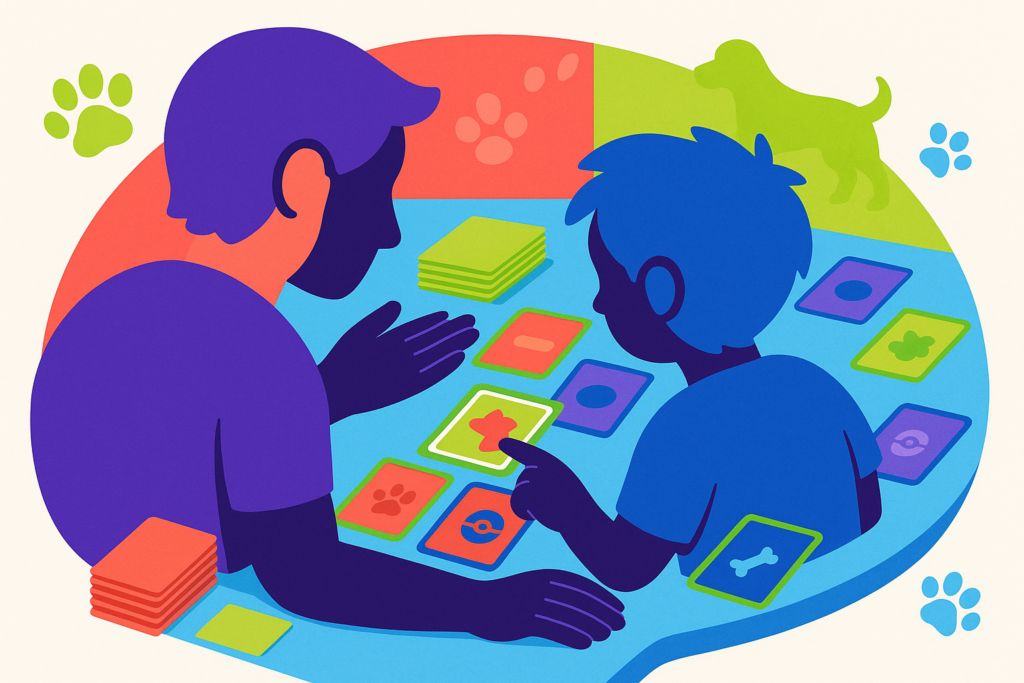
The sweet spot for parents is helping enough that the deck works, but not so much that your child feels like a spectator in their own project.
Good prompts sound like this:
- “Do you want more of this Pokémon or less?”
- “What happens if you draw this card late in the game?”
- “Should this card help you attack, or help you set up?”
- “Do you want this deck to be quicker or more sturdy?”
These kinds of questions keep the conversation going without turning it into a lecture. They also help children learn to think about card choices in a simple, practical way.
If your child starts drifting towards a deck that is a bit messy, that is fine too. You can gently point out where a card might not fit, then let them decide whether the fun factor is worth the trade-off. That balance is often where the best learning happens.
Keep the first few games short and low-pressure
A first deck is not just about the build, it is about the experience of playing it. Short, relaxed games help children see how their choices affect the board without the pressure of a long match.
If possible, play with a few house rules that make learning easier. You might skip side prizes for the first game, talk through each turn out loud, or allow a little extra time for decisions. The point is to make the game feel welcoming, not rushed.
This is especially helpful for parents who are new to the hobby themselves. You do not need to know every interaction immediately. Learning together is part of the fun, and it gives you a shared language for future games.
For families who want to keep building that enthusiasm, our article on How to Get Your Kids Into the Pokémon TCG (and Why It’s Great for Them) is a lovely next read.
When to add a little more structure
Once your child understands how their first deck works, you can begin tightening it up slowly. That does not mean turning it into a competitive build overnight. It just means noticing what feels clunky and making small improvements.
Maybe they are often stuck without enough cards in hand. Maybe they keep missing Energy attachments. Maybe one Pokémon is never used and can be swapped out for something better. Small changes like that can make the deck feel much smoother without losing its personality.
At this point, you can also start looking at stronger deck-building ideas in a more informed way. If you are ready for a next step after the first family deck, our Building Your First Competitive Deck On A Budget post is a natural follow-on once the basics are comfortable.
Practical Takeaway: Start Simple
Start with your child’s favourite Pokémon, give the deck one simple job, and add just enough support to make it fun to play. Let them help choose, let them make a few imperfect calls, and keep the first games light and encouraging. The aim is not perfection, it is shared time, confidence, and a deck they are proud of.
Building a first deck together is one of those hobby moments that can stick with a child for years. It is part play, part problem-solving, and part quality time with someone they trust. That is a pretty top dog combination in our book.
If you and your child are ready to fetch the next card, we are always here to help you keep things simple, affordable, and fun for the whole pack.
