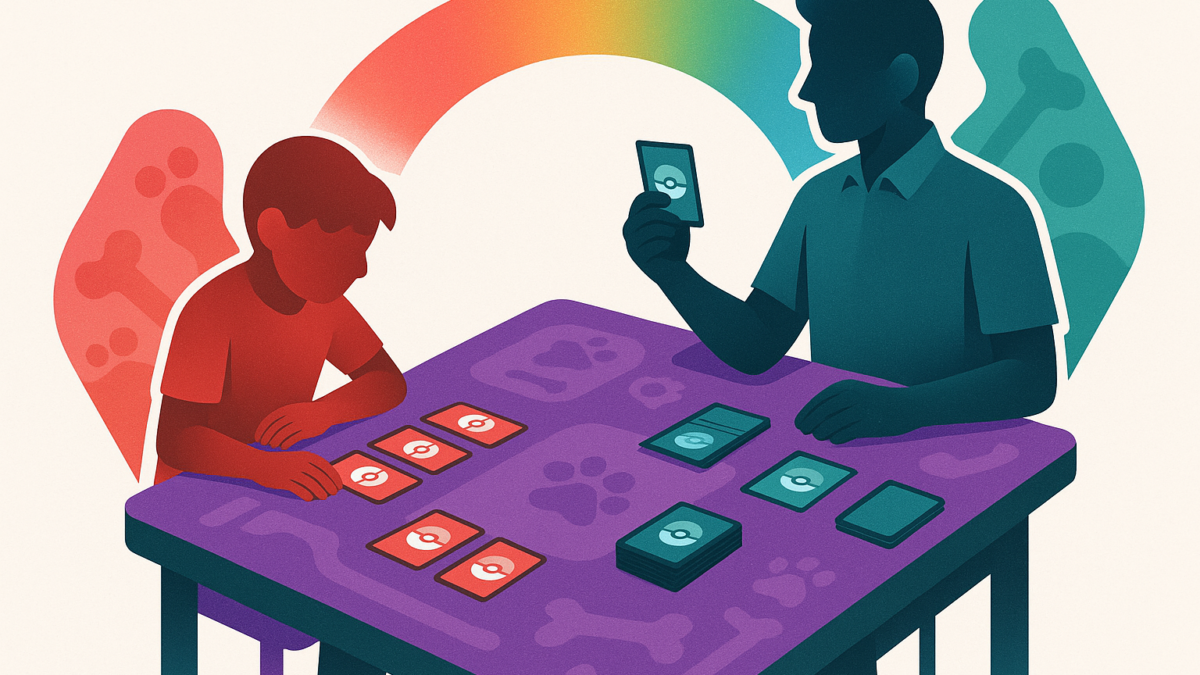
A big loss at the Pokémon TCG table can feel enormous when you’re small. Tears, crossed arms, and a sudden refusal to shuffle up again are all part of the learning curve. The good news is that sportsmanship is something we can teach, gently and consistently, and most players in the pack have had to learn it too.
Teaching kids good sportsmanship in the Pokémon TCG
The Pokémon TCG asks a lot of kids, even when they’re just playing for fun. They have to follow rules, track turns, plan ahead, cope with randomness, and accept that a game can turn in a single draw. For younger players, that mix can be overwhelming.
That’s why a meltdown after losing is not usually about the card game itself. More often, it’s about frustration, disappointment, tiredness, or feeling like they were so close to winning. If we treat the reaction as a teaching moment instead of a behaviour problem to fix instantly, it becomes much easier to help.
It also helps to remember that adults feel this too. Plenty of us have had a rough loss at a tournament, then needed a minute before we could smile, shuffle up, and play again. Kids are simply learning that same skill with less experience and more emotion.
Model the behaviour you want to see
Children learn most from what we do at the table, not what we say from across the room. If we want them to handle winning and losing well, we need to show them how it looks.
When you win, keep it warm and brief. A simple, “Good game, that was close,” teaches respect without rubbing it in. If your child wins, encourage them to say the same. If they forget, that’s fine, we can prompt them kindly. Over time, those small habits become second nature.
When you lose, let your child see you handle it calmly. Try saying, “You got me there,” or, “That was a strong deck, well played.” This is especially useful for parents who do not play competitively themselves. You do not need perfect knowledge of the game to model grace, just a steady response and a respectful attitude.
Reframe losses as useful information
One of the best ways to reduce post-game upset is to shift the meaning of losing. A loss does not have to mean “I’m bad at this.” It can mean “I found something to work on.”
For children, that reframing needs to be simple. Instead of analysing everything immediately after the game, ask one small question, such as:
- What part of the game was tricky?
- Was there a turn where things changed?
- Did your opponent do something smart that you want to remember?
This keeps the focus on learning rather than shame. It also helps children notice patterns in the game, which is a useful skill in the Pokémon TCG and beyond. They begin to see that every match teaches something, whether they win or lose.
If your child is old enough to reflect a little more, you can gently talk about deck consistency, prize trade decisions, or when a gameplan went off track. Keep it light and age-appropriate. The goal is not a post-match lecture. It is helping them see that improvement comes from experience.
For parents who want more support on getting started, our guide on How to Get Your Kids Into the Pokémon TCG (and Why It's Great for Them) is a helpful place to start.
Teach that winning also has rules
Good sportsmanship is not only about losing well. Winning kindly matters just as much.
Some children get very excited when they win, especially if they were worried about losing. That excitement is normal. The lesson is to keep it from turning into gloating, teasing, or a victory dance that leaves the other player feeling small.
A good rule of thumb is to praise the game, not just the result. “That was a really fun match,” or, “You nearly had me,” keeps the tone friendly. If your child tends to boast, remind them that the game is more enjoyable when both players leave the table wanting another round.
This matters in families, at home, and in local playgroups. The Pokémon TCG is a social game, and kids who learn to win with grace are much more likely to make friends, keep playing, and feel welcome in the wider community.
Know when a break is the right call
Sometimes the kindest response is not to push through another game. If a child is already tired, hungry, overstimulated, or close to tears, forcing them to keep playing usually makes things worse.
A short break can reset the whole mood. Water, a snack, some fresh air, or five quiet minutes away from the table can make a huge difference. If the evening has gone off the rails, it is also perfectly fine to call it there and come back another day.
This is not giving in. It is teaching self-regulation. Children need to learn that stepping back is a healthy choice when emotions are running high. That lesson is just as useful in school, sport, and friendship as it is in the Pokémon TCG.
If your child often struggles during more competitive play, it may also help to ease them into organised events gradually. Our post on Prerelease Events 101: Your First Time at a Pokémon TCG Prerelease has practical advice for making new play experiences feel less daunting.
Make the table a safe place to learn
Kids handle losing better when the table feels safe. That means no sarcasm, no shame, and no comparing them to other players. It also means avoiding phrases like “It’s only a game” when they’re upset, because that can feel dismissive, even if we mean well.
Instead, try to name the feeling and keep the boundary. “I can see you’re disappointed, and that’s okay. We still need to finish respectfully,” gives both empathy and structure. Children often calm down faster when they feel understood first.
If you play together regularly, you can even make sportsmanship part of your usual routine. Say hello before the match, shake hands or high-five after, and always end with one positive comment about the game. Repeated rituals make the whole experience feel predictable and secure.
If you want to help your child build good sportsmanship, start small. Model calm wins and losses, praise effort and smart play, and keep post-game conversations short and encouraging. When emotions run high, take a break rather than pushing through. The habit of respectful play grows through repetition, not pressure.
Learning how to lose, and how to win, is one of the most valuable parts of playing the Pokémon TCG. It helps children build resilience, empathy, and confidence, and it makes the game more enjoyable for everyone at the table.
At Top Dog Decks, we love seeing more families join the pack and grow in the hobby together. With patience, encouragement, and a little practice, these moments of frustration can become part of something much bigger, a shared love of the game that lasts.
